Recapitulating the Condition of Planetarity
To repeat what I have said earlier:
The current global situation - whether viewed through the lens of political conflict, economic instability, or the accelerating breakdown of our ecological life-support systems - is boiling over; it’s a crisis of metabolic order, not just social order. International efforts to combat climate change routinely falter, hampered by the short-term incentives of the nation-state and the demands of quarterly capitalism. Meanwhile, our unquestioned dominance over the biosphere continues to drive the sixth mass extinction, erasing ancient lineages of life at a terrifying pace. While each of these cascading crises possesses specific material, political, and historical causes, an underlying flaw connects them all: a profound and deeply ingrained misunderstanding of how human beings relate to the Earth.
TLDR; We must fundamentally shift our perspective from the Global to the Planetary.
In the modern era, humanity has weathered two massive conceptual decentrings. First, the Copernican revolution proved that the Earth is not the center of the universe, displacing our cosmic address from the heart of creation to the suburbs of an unremarkable galaxy (ok, Copernicus isn’t really modern....). Second, the Darwinian revolution proved that humans are not a unique, divine creation, but merely one evolving species among many, displacing our biological origins. The condition of planetarity represents a third major paradigm shift. This third shift takes aim at our world-making powers. Planetarity dethrones human beings as the sole or even the primary agents reshaping the face of the Earth. It rejects our autonomous mastery over nature, exposing us to uncomfortable truths such as: bacteria have a greater claim to ruling the Earth than we do. We are latecomers to a biogeochemical project that has already been in progress for billions of years.
Last month, we explored the condition of planetarity through the dimension of time; synthesizing the rapid, chaotic flow of human history with the deep, slow rhythms of the Earth to grasp what Henri Bergson might inspire us to call a Planetary Durée, we have spent this month paying attention to Space. I have been trying to rehabilitate space from a passive backdrop into an active, living participant in our shared planetary drama. Bergson thought that turning Time into Space reduces the living duree to clock time. But imperialist space colonizes itself too, not just time! My attempt to rescue space has revolved around the concept of Planetary Alterity: the recognition that the Earth is not merely our familiar home, but a radically alien, complex system that utterly exceeds our totalization and control.
The Myth of the Passive Container
Clock time and scale space treat them as passive containers; measurement devices that don’t have agency of their own. In particular, space is viewed as a neutral stage, an empty theater upon which human beings acted, traded, fought, built empires, and told themselves flattering stories about historical progress. Terra Nova. Even when we spoke grandly of “the world,” what we almost always meant was the human world: a mapped, abstract surface of sovereign territory, national borders, logistical supply chains, maritime travel routes, financial markets, and military power. Space, in this picture, was smooth, available, and ultimately manageable, a standing reserve waiting to be organized by human ingenuity.
That picture is no longer tenable. Climate change, mass extinction, the advent of planetary sensing, and the astronomical discovery of thousands of exoplanets have all conspired to shatter it. The Earth is not simply the mute background where human history happens. It is an active, dynamic, historically layered, and often deeply unfamiliar reality in which human life is inextricably embedded.
This spatial domination is precisely what Gayatri Chakravorty Spivak critiques when she insists that we must allow the planet to overwrite the globe. The globe is a human construct, an abstraction produced by the convergence of multinational finance, media networks, and the rigid, mathematical gridwork of Geographical Information Systems (GIS). The globe is a smooth sphere optimized for the frictionless flow of capital. It effectively enacts a blindness to alterity, reducing the vibrant, jagged reality of the Earth to a manageable spreadsheet of latitudes and longitudes.
The planet, by contrast, exists in the species of alterity. It belongs to a system that remains profoundly underived from human subjectivity. To think in terms of the planetary is to experience the uncanny: that we inhabit this immense, dynamic rock merely on loan. Planetary alterity asks us to recognize that the Earth is not just where we are, but who and what we are with.
The Octopus, the Earthworm, and the Mahayana
We actually encounter the alien in space far more readily than we do in time. Until we invent time travel, deep history is an abstraction; the fossil record can be mined for insights, but you can never truly know what it was like to be a dinosaur. But there are creatures more alien than dinosaurs who are within walking distance - press your face against the glass, and gaze into the highly intelligent, rectangular pupils of an octopus - a creature with whom you last shared a common ancestor roughly half a billion years ago - and you are in contact with a profoundly ‘other’ being who is nevertheless a fellow creature. Even closer, scrape a sample from the plate you left in the sink overnight and peer at it through a microscope - you’ll see creatures who are even more alien to the macroscopic, multicellular world we inhabit. But the very fact that the octopus is trapped in an aquarium or served on a dinner plate demonstrates our historical ability to colonize, contain, and consume its world. Our relationship with spatial alterity has historically been one of conquest rather than coexistence.
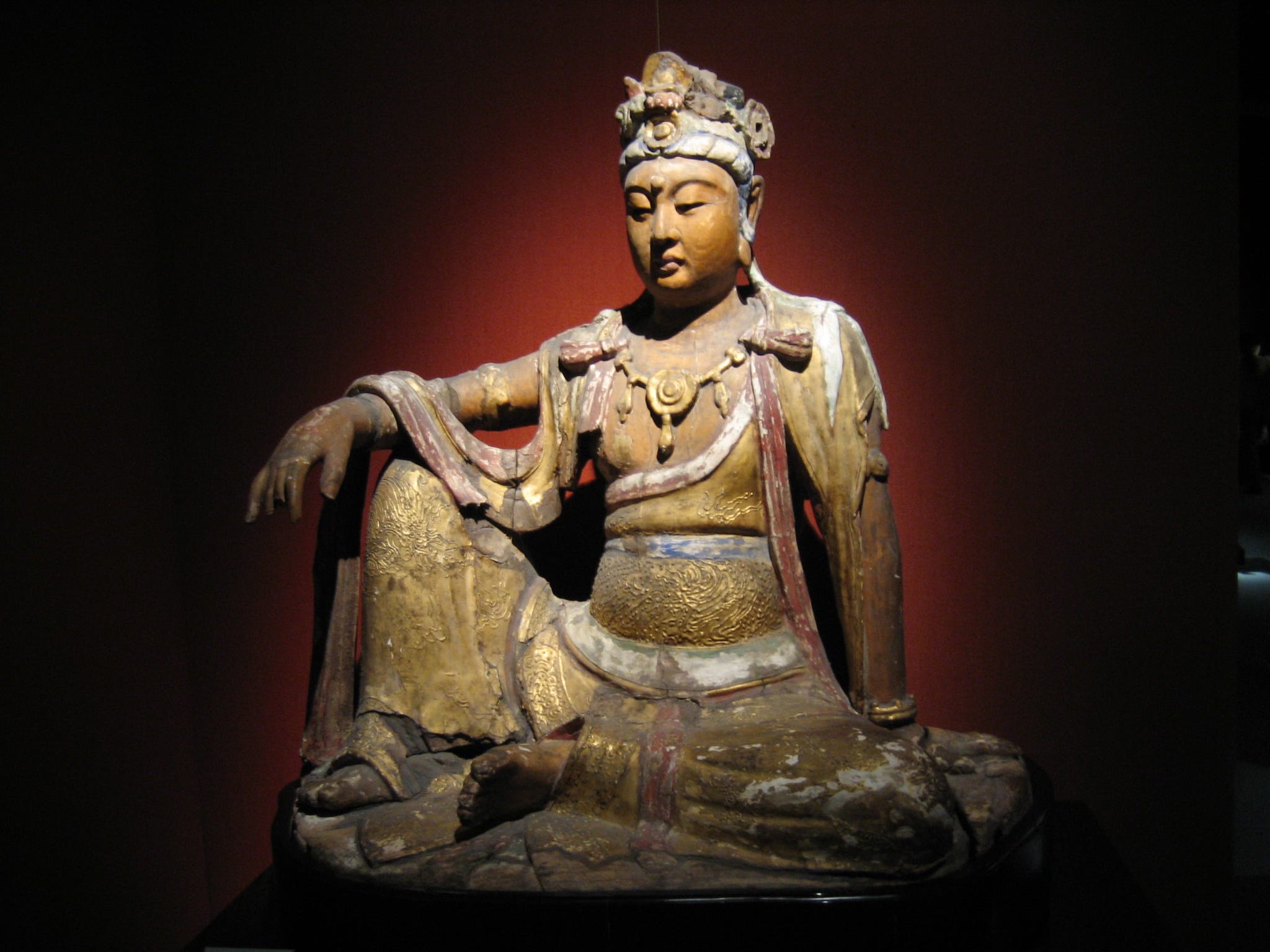
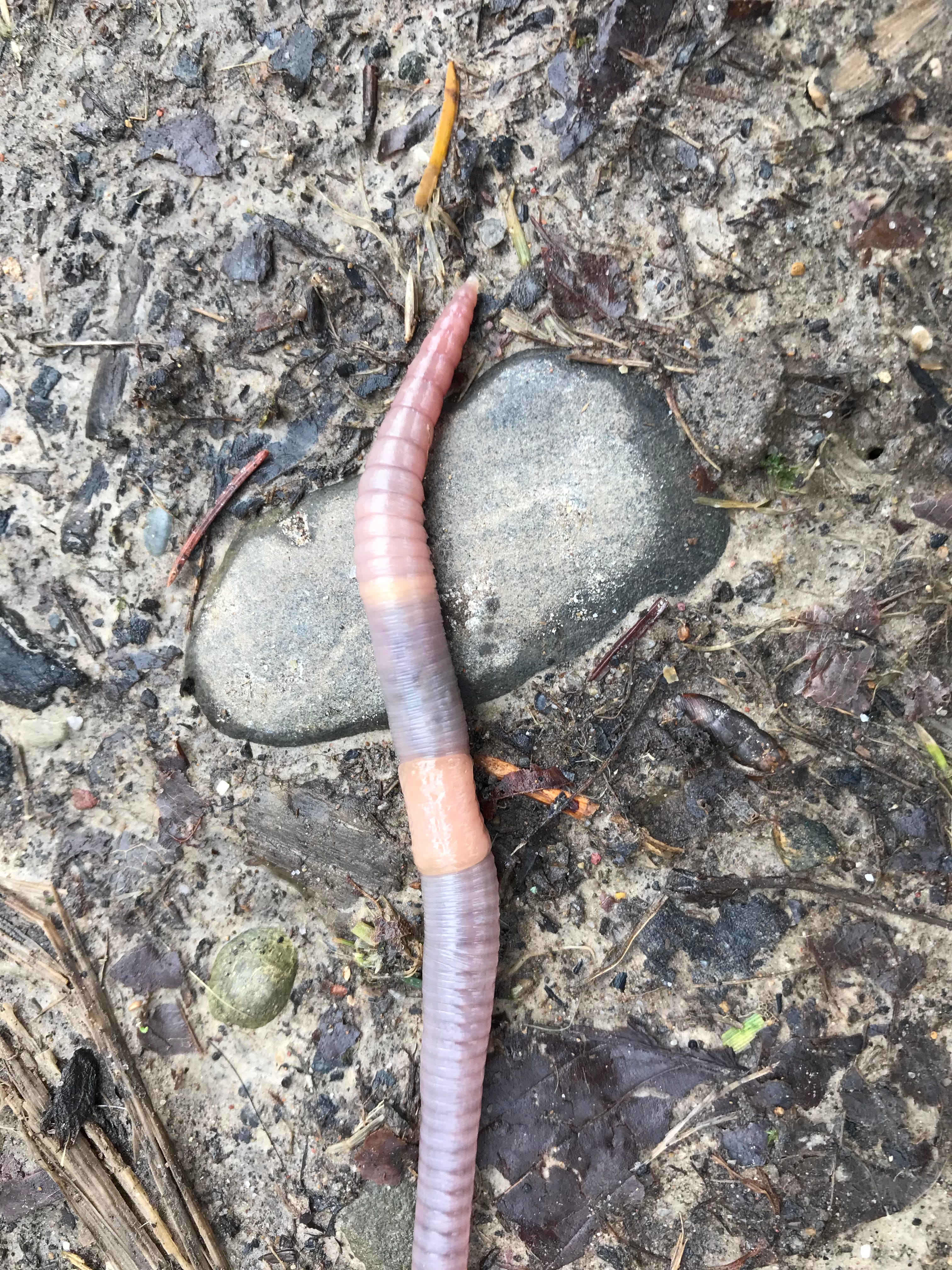
To correct this, we must change our posture. Rather than viewing the world from above, like an eagle or a satellite surveying a conquered map, planetarity asks us to burrow into the soil like an earthworm. We must chew our way to wisdom, intimately encountering the strange, nonhuman actors, microbial networks, and geochemical flows that make our lives possible. The earthworm does not survey space; it ingests it, lives within it, and transforms it from the inside out. In the Mahayana, the Bodhisattva takes a sacred vow not to enter the final peace of Nirvana until all other sentient beings have achieved enlightenment together. To think planetarily about space is to adapt this vow for the Anthropocene; it is the recognition that any flourishing we engineer must be a multispecies flourishing. It must include the octopus and the bacterium, the ancient riverbed and the subterranean rock formation. It asks us to accept that the planet contains worlds - deep oceans, atmospheric currents, microscopic ecosystems - that are not simply unknown, but genuinely alien, and it’s not clear if we will ever develop the empathy we need to transcend that alterity.
Viscosity and the Swarm: The Reality of Hyperobjects
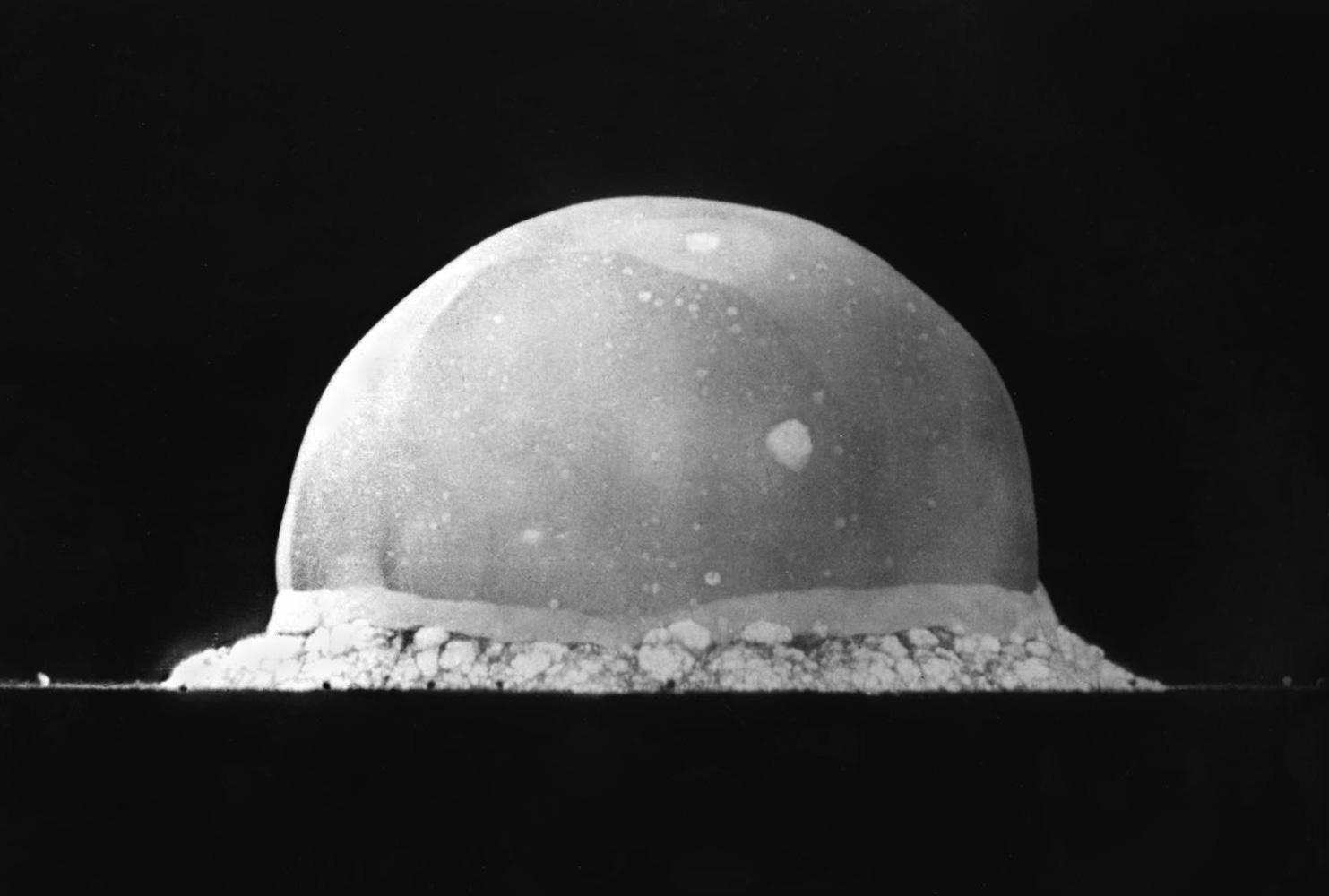
The Earth is not a passive canvas, but a swirling swarm of living and non-living actors interacting without any centralized control. Timothy Morton reveals it as a physical reality from which we cannot escape; even billionaires will mostly want to die on Earth. This brings us to the terrifying and liberating concept of hyperobjects. Hyperobjects are entities like global warming, the planet’s carbon cycle, tectonic plates, or the diffuse soup of oceanic microplastics, that are so massively distributed in time and space that they completely shatter our traditional, evolutionary modes of perception. You cannot point to global warming in a single place; you can only observe its localized effects, like a flooded street, a blazing forest, or an unseasonably warm winter day.
Because of their immense scale, hyperobjects are viscous - they stick to us so that we cannot achieve a detached, objective, scientific distance from them because we are always already caught inside them. Global warming is not an event happening out there on a map; it is an omnipresent spatial reality altering the very weather outside our windows and the cells in our bodies. This physical entanglement renders traditional, isolated environmental management completely obsolete. We cannot build a wall to keep the hyperobject out. It forces us to confront the alien, uncontrollable scale of our own planetary exhaust.
The Exoplanetary Mirror and the Flight to the Stars
Paradoxically, looking out into the cold, alien void of the universe might be the best possible way to deepen our grasp of the Earth’s own alterity. In the last thirty years, astronomy has undergone a quiet but spectacular revolution. We have gone from knowing virtually nothing about planets around other stars to cataloging over 5,000 of them, with the realization that there are likely more planets than stars in the Milky Way.
As Joshua N. Winn highlights in The Little Book of Exoplanets, the true shock of this discovery is not just the sheer abundance of planets, but their diversity. The exoplanet zoo features worlds with highly elongated, chaotic orbits, hot Jupiters skimming the surfaces of their stars on the brink of fiery destruction, circumbinary planets orbiting two suns at once, and puffball planets as large as Jupiter but as light as Styrofoam. The two most common types of planets found in our galaxy are super-Earths and mini-Neptunes, neither of which exist in our own Solar System.
Winn reminds us that the universe has run every possible chemical and geological reaction countless times. We are a highly contingent, incredibly strange outcome among billions. Is life generic? Is it likely to exist around most stars? How many harbor intelligences like us? Are most intelligences like ours? We don’t know how to resolve Fermi’s Paradox as of now.
For Chris Impey, this realization serves as a powerful mandate for human expansion. In Worlds Without End, Impey argues that to survive the resource bottlenecks, climatic tipping points, and existential threats on our home planet, humanity must inevitably become an interplanetary species. He advocates for mining passing asteroids, settling the hostile deserts of Mars, and eventually sending nanobots to nearby star systems. Is that the Globe up to its usual tricks, colonization in the name of science and survival?
This tension reveals the fundamental contradiction of spatial planetarity. On the one hand, we only apprehend the planetary through our vast, world-spanning technosphere. The Stack of computation, undersea cables, airborne sensors, orbiting satellites, and deep-space telescopes - as Benjamin Bratton argues - is what allows us to see the Earth as a unified system in the first place. That same system pointed outward, at distant stars and the planets around them, makes us confront the alien unfamiliarity of other planetary systems.
Conclusion: Philosophical Engineering and the Earthworm’s Labor
The condition of planetarity, ultimately, demands that our response become a kind of philosophical engineering. It is no longer enough for philosophy to merely interpret the planet as an abstract idea, nor is it enough to simply reflect on our entanglement. As we face the escalating, interwoven crises of the Anthropocene, we have to actively compose and engineer the concepts, institutions, governance protocols, and tools that are adequate to a planetary scale.
Yeah, but isn’t that a Trojan horse for introducing more global control over the planet? I worry about that...
We require an expansive political imagination that dissolves the rigid boundaries of the nation-state, explicitly including the lithosphere, the hydrosphere, the cryosphere, and our nonhuman kin in our definition of territory. Sovereignty has to be replaced by a concept that’s one level deeper and way more important: habitability. We need a vocabulary for habitability that can hold together alterity and relation, humility and action, planetary-scale computation and local mud.
The real lesson of space in the condition of planetarity is not that we should flee the Earth in rockets to colonize the stars, nor that we should surrender in terror before the viscous quicksand of hyperobjects. It is that we must learn the difficult, unglamorous labor of staying with a planet that is at once intimately ours and wildly alien; a planet that is knowable through science yet fundamentally inexhaustible; a planet that is ours to care for, but never ours to own.
To think planetarily is to accept the Bodhisattva’s vow for the Earth. It is to dig into the soil, honoring the bacteria, the oceans, and the deep rock. It is the hard, necessary work of encountering Planetary Alterity right here at home, acknowledging our fragile place within an impossibly vast, living system.
To have and hold, but not possess.