


In this week’s exploration of philosophical engineering, I explore the contours of the key objects that needs apprehension in the age of Planetarity, i.e., the Anthropocene and the Planet. We will take a look at entanglements and meshes and hyperobjects among other fancy words. I plead forgiveness in advance for introducing so much jargon in one essay.
From the Global to the Planetary: De-Centering the Human
The first step in apprehending the Anthropocene is to clarify the nature of the object that has entered philosophy’s frame. This requires a crucial distinction, articulated by thinkers like Dipesh Chakrabarty and Gayatri Chakravorty Spivak, between the “global” and the “planetary”. In the second thesis of his book on “The Climate of History,” Dipesh Chakrabarty says:
Thesis 2: The Idea of the Anthropocene, the New Geological Epoch When Humans Exist as a Geological Force, Severely Qualifies Humanist Histories of Modernity/Globalization
The “global” is an intrinsically human-centric construct. It refers to the world as it has been scaled up and integrated by human systems, primarily through the expansion of capitalism, technology, and colonial power. Globalization, in this sense, is the process of creating a single, interconnected space of human activity, a world made in our image. History written from a global perspective, as Chakrabarty notes, fundamentally centers the human story. As his third thesis says:
Thesis 3: The Geological Hypothesis Regarding the Anthropocene Requires Us to Put Global Histories of Capital in Conversation with the Species History of Humans
The “planetary” de-centers the human. It refers to the Earth not as a passive backdrop for human history, but as an agent in its own right—a complex, dynamic system with its own history, rhythms, and logics that operate on scales far exceeding the human. Planetary history is the history of deep time, of tectonic shifts, evolutionary pathways, and biogeochemical cycles. The Anthropocene marks the moment when these two histories - the global history of human expansion and the planetary history of the Earth system - have collided and become entangled. To apprehend our age is therefore:
(Worse): hyperscale the global so that it embeds itself deeper into the earth - this is the path being blazed by the Chinese Electrostate. I call this the stage of Planetary Colonialism that succeeds the stage of Planetary Plunder, like how the European colonization of Asia (spreading civilization, from what I have been told) succeeded the straightforward genocide and slavery of the Colombian expansion.
(Better) Shift our conceptual framework from the globe to the planet. It is to heed Spivak’s call to “imagine ourselves as planetary subjects rather than global agents,” a shift that is at once epistemological, ethical, and political.
We know how to do the first - the Chinese are already doing it and soon the rest of us will be doing it too. The second is much harder than the first; we don’t know how to do it any scale, let alone the hyperscale that’s needed today. Nevertheless, both share the recognition that we are not masters of a globe of our own making, but inhabitants of a planet whose agency has to be taken into account, even if with brutality.
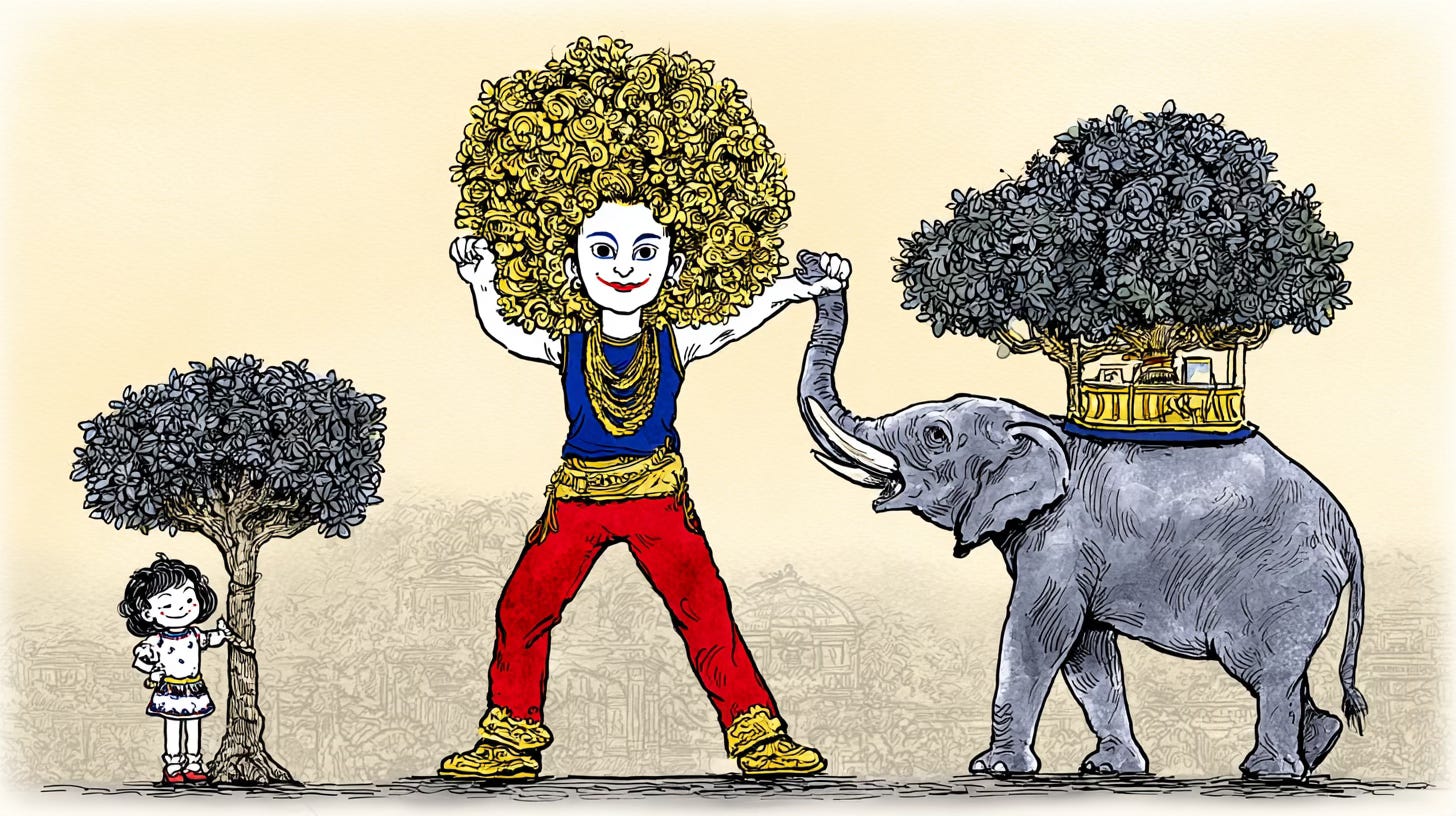
Entangled: Beyond the Nature/Culture Divide
The emergence of the planetary as the object of apprehension signals the collapse of a foundational pillar of modern thought: the ontological dualism between Nature and Culture. Dipesh’s first thesis captures it so:
Thesis 1: Anthropogenic Explanations of Climate Change Spell the Collapse of the Humanist Distinction between Natural History and Human History
For centuries, Western philosophy has operated on the assumption of a stable, passive, and law-like Nature that serves as the stage upon which the dynamic drama of human Culture, history, and politics unfolds. Nature was the realm of necessity, Culture the realm of freedom. The Anthropocene renders this division untenable. As Clive Hamilton and others have argued, in our current epoch, “social, cultural and political orders are woven into and co-evolve with techno-natural orders of specific matter and energy flow at a global level”. The burning of fossil fuels is not merely an economic activity; it is a geological event that alters the chemistry of the atmosphere. Industrial agriculture is not just a mode of production; it is a planetary force that reshapes the nitrogen cycle.
To grasp this new reality, we need concepts that transcend the old dichotomy. The philosopher and sociologist Bruno Latour offers one such concept in his figure of Gaia. Latour’s Gaia is not the romantic, harmonious superorganism of New Age spirituality, nor is it the old, inert “Nature” of modern science. It is a secular, political, and profoundly agentic figure that names the tangled mess of living and non-living actors whose interactions constitute the Earth system. Gaia, for Latour, is “an entity composed of multiple, reciprocally linked, but ungoverned self-advancing processes”. It is a system characterized by feedback loops, unpredictable emergences, and a distinct lack of centralized control. To “face Gaia” is to apprehend this complex entanglement without resorting to the comforting fictions of either a mastered Nature or a transcendent Mother Earth. This resonates with the broader philosophical turn toward “ecological entanglement,” which insists that humans and non-humans are not separate entities but are deeply and inextricably interwoven, co-constituting one another at every level.
The object of apprehension in the Anthropocene is no longer a world of discrete subjects and objects, but a thick, messy, and agentic mesh of relations.
Anatomy of a Hyperobject
To give a more precise philosophical anatomy to this new, entangled object, the work of Timothy Morton is useful. Morton introduces the concept of “hyperobjects” to describe entities that are “massively distributed in time and space relative to humans” to such a degree that they defy our traditional modes of perception and conception.1 Global warming is the quintessential hyperobject: we can measure its effects, witness its local manifestations (a hurricane, a drought, a heatwave), and model its dynamics, but we can never see or touch the thing itself in its totality. Other hyperobjects include the planetary carbon cycle, the totality of plastic in the oceans, or the radioactive material dispersed across the globe by nuclear activity. The Anthropocene is a hyperobject, and so is the planet. Morton identifies five key characteristics that define hyperobjects and make them so difficult to apprehend:
Viscous: Hyperobjects stick to you. They undermine the possibility of maintaining a detached, critical distance. We are not outside of global warming looking in; we are inside it, breathing it, contributing to it, and subject to its effects. It adheres to our being.
Molten: Hyperobjects are so massive and fluid that they challenge our conventional, three-dimensional understanding of space and time. They warp the field of relations, making it impossible to map them onto a simple, fixed grid.
Nonlocal: A hyperobject is not fully present in any of its local manifestations. The storm that floods a city is a real and devastating event, but it is not, in itself, climate change. The hyperobject is fundamentally withdrawn from direct experience, accessible only through its traces and effects across a vast network.
Phased: Hyperobjects occupy a higher-dimensional phase space, meaning that we, as three-dimensional beings, can only ever perceive “slices” or temporal cross-sections of them. We see the weather, but the climate remains an abstraction.
Interobjective: A hyperobject is not a single, monolithic thing but is formed by the relations between a multitude of other objects. Climate change, for instance, emerges from the interactions between the sun, the atmosphere, oceans, fossil fuels, human economies, and countless other entities. We perceive it only through its effects on other objects—thermometer readings, ice core data, sea level measurements.
That’s quite the hypermarketing for hyperobjects, and I worry that we have gone way overboard, but there’s something useful here for sure.
The flows of carbon, nitrogen, and silicon that the Anthropocene forces us to confront are precisely these kinds of hyperobjects. The planetary carbon cycle, for example, is a vast, ancient process operating across the biosphere, atmosphere, oceans, and geosphere over millennia. Human activity, primarily the burning of fossil fuels, has violently accelerated one part of this cycle, injecting carbon into the atmosphere at a rate far exceeding the system’s capacity to absorb it, thereby creating the hyperobject of anthropogenic climate change.
To apprehend the Anthropocene is to learn to think at the scale of these un-graspable, yet world-shaping, entities.
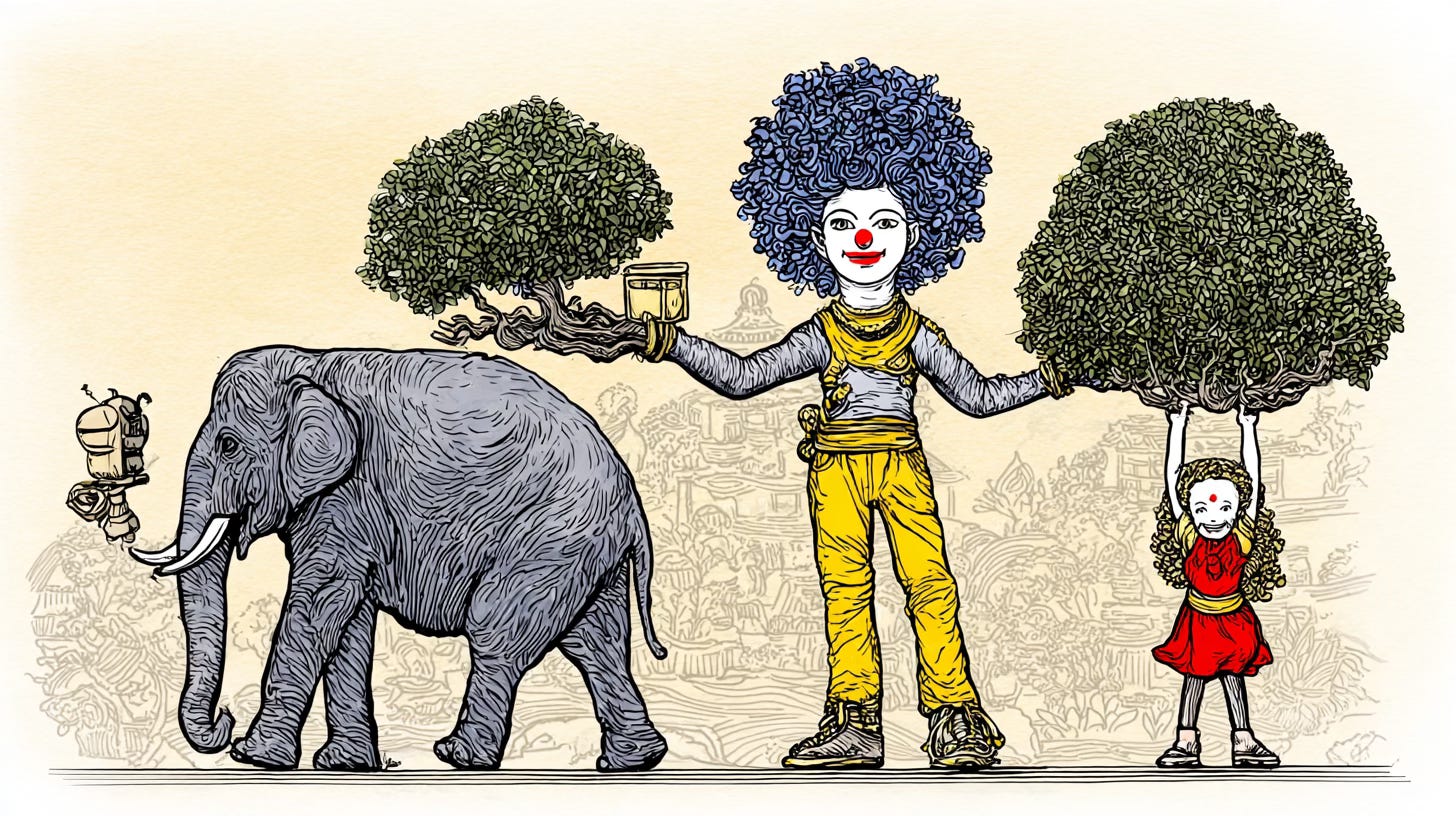
The Ethics of Flourishing: Multispecies Justice
This radical shift in the object of apprehension—from the human social world to the entangled planetary condition—carries with it a profound ethical weight. If philosophy once centered its ethical inquiries on the question, “What is the good life for humans?”, the planetary condition compels a much broader question: “What constitutes the flourishing of beings?”. The scope of justice must necessarily enlarge from a concern with distributions and recognitions within human communities to a concern for the well-being of the various species that inhabit the planet.
This ethical expansion finds its most rigorous expression in the emerging field of Multispecies Justice (MSJ). MSJ is not merely an attempt to extend pre-existing human-centered theories of justice to include animals or ecosystems. Instead, it calls for a “fundamental reconceptualization of justice itself within the context of ecological interconnectedness”.52 It begins with the premise that justice must account for the interests and claims of all “Earth others”—animals, plants, rivers, forests, microbial communities—and the complex relationships that enable their functioning and flourishing.52 Core concepts like rights, harm, freedom, and repair must be rethought from a non-anthropocentric perspective. A dam, for example, is not just an infrastructure project with human costs and benefits; it is an act of profound injustice against a river and the entire web of life that depends on its flow. Industrial agriculture is not just an economic system; it is a regime of multispecies violence. Apprehending the planetary condition, therefore, is an inherently ethical act. It means recognizing the conditioned nature of all life and the co-dependence of all beings within fragile, interconnected Earth systems.
This reconceptualization reveals a crucial feature of our new philosophical situation.The planetary condition is not a passive object awaiting our comprehension. As a hyperobject, it is viscous and nonlocal; as Gaia, it is an unpredictable assemblage of unruly agents. The planet is not waiting to be apprehended; it is actively making its presence felt through cascading crises, from climate disruption to mass extinction. Latour’s “intrusion of Gaia” is an active event; the planet is forcing a confrontation, compelling us to reckon with its agency. This means the act of apprehension is no longer a one-way street where a human subject grasps a non-human object. Apprehension has to become a dynamic act, more a dance of beings than the detached view of the Planet from a safe distance.
Note 1: I am a little ashamed to admit that this essay is full of social science/humanities jargon that is
is hard to understand and worse
might be empty of content.
It’s the best we have got right now as we try to merge the Earth System and Ecological Sciences with the more-than human Social Sciences and Humanities.
Note 2: We need to do much better, and I desperately want to do so, but I am a ruminant, and this material is making its way through my first stomach. It has to be processed at least a couple more times before I can metabolize it into a system I can be proud of.
Hi! Wanted to address the notes you left at the end of the essay. As a young person trying to navigate these questions and digest what the answers might mean for my work and life, I deeply appreciate your effort at weaving the philosophy needed to understand the current human (or rather planetary) predicament.
Having read some of your work, and the work of others asking similar questions, I have come to realize that nobody has exhaustive answers to the questions of “What the f**k is going on?” And “Where the f**k do we go from here?” But finding all of these thinkers and their thoughts on the internet has been incredibly inspiring and energizing in the face of what we are up against.
I guess what I’m trying to say is - thank you :)